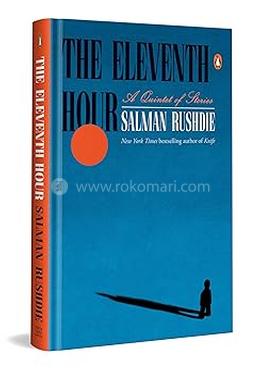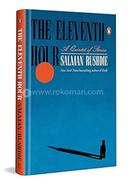
Rushdie turns his extraordinary imagination to life’s final act with a quintet of stories that span the three countries in which he has made his work―India, England, and the US―and feature an unforgettable cast of characters.
“In the South” introduces a pair of quarrelsome old men―Junior and Senior―and their private tragedy at a moment of national calamity. In “The Musician of Kahani”, a musical prodigy from the Mumbai neighborhood featured in Midnight’s Children uses her magical gifts to wreak devastation on the wealthy family she marries into. In “Late”, the ghost of a Cambridge don enlists the help of a lonely student to enact revenge upon the tormentor of his lifetime. “Oklahoma” plunges a young writer into a web of deceit and lies as he tries to figure out whether his mentor killed himself or faked his own death. And “The Old Man in the Piazza” is a powerful parable for our times about freedom of speech.
Do we accommodate ourselves to death, or rail against it? Do we spend our “eleventh hour” in serenity or in rage? And how do we achieve fulfillment with our lives if we don’t know the end of our own stories? The Eleventh Hour ponders life and death, legacy and identity with the penetrating insight and boundless imagination that have made Salman Rushdie one of the most celebrated writers of our time.
Sir Ahmad Salman Rushdie, FRSL (born 19 June 1947) is a British Indian novelist and essayist. His second novel, Midnight's Children (1981), won the Booker Prize in 1981 and was deemed to be "the best novel of all winners" on two separate occasions, marking the 25th and the 40th anniversary of the prize. Much of his fiction is set on the Indian subcontinent. He combines magical realism with historical fiction; his work is concerned with the many connections, disruptions, and migrations between Eastern and Western civilizations. His epic fourth novel, The Satanic Verses (1988), was the subject of a major controversy, provoking protests from Muslims in several countries. Death threats were made against him, including a fatwā calling for his assassination issued by Ayatollah Ruhollah Khomeini, the Supreme Leader of Iran, on 14 February 1989. The British government put Rushdie under police protection.