And yet, coercive bureaucracy, hierarchy, and control—old ways of thinking and working—are still with us, a deep-seated and powerful legacy. We are living through a profound transition from an old, industrial era to a new one that is digital, transparent, and complex.
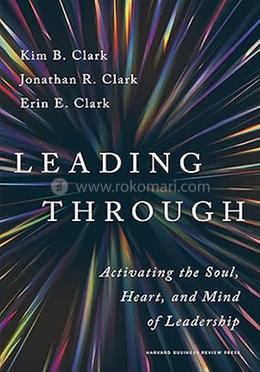
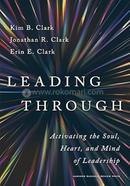
In this important new book by former dean of Harvard Business School Kim Clark, written with his business school professor son, Jonathan, and management consultant daughter, Erin, the dynamic struggle between two competing paradigms of leadership is compellingly illustrated: an old paradigm that involves control and power over people versus a new one that enables and inspires power through people.
With rich examples and stories, the authors show how deeply ingrained the legacy model of leadership remains and how destructive it is, causing waste and loss of human potential, stifling innovation, and ultimately resulting in what the authors call "organizational darkness." They go on to articulate a new, positive model, one that consciously seeks to do good and to make things better; that cares for people, helping them to thrive; and that mobilizes people to solve tough problems. These three elements, they argue, are the soul, heart, and mind of leadership, and activating them requires careful attention to both the personal and the organizational dimensions of leadership.
The narrative is interwoven with probing analysis and reflection, and the authors speak clearly and frankly about the moral aspects and impact of leadership. They also provide a concrete frame and approach for scaling the new model and creating a vibrant leadership system.
Leading Through is a deep and essential account of the evolution of our leadership thinking and practice that is both timely and timeless.
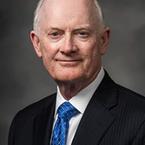
Kim B. Clark is the NAC Distinguished Professor of Management at the BYU Marriott School of Business. I received the BA, MA and Ph.D. degrees in economics from Harvard University. I loined the faculty of the Harvard Business School in 1978 and served as Dean of the Faculty from 1995 to 2005. My teaching and research at HBS focused on product development, and operations strategy, with particular attention to the role of senior leaders in creating outstanding performance in innovation, productivity and quality. My later work focused on modularity in design and the interaction of technological change and competition in industry evolution. During my years as Dean at HBS I focused on articulating the school’s mission – educating leaders who make a difference in the world – and pursued initiatives in leadership and values, entrepreneurship, technology in learning and education, and international research and case writing. In 2005 I left HBS to become the president of BYU-Idaho. It was a remarkable time to pursue the mission of the university to develop disciple-leaders with initiatives in a Christ-centered learning model, online education to increase access, and Pathway, a program to open access to higher education to students all over the world. Campus enrollment at BYU-Idaho expanded from 12,500 students in 2005 to over 25,000; with the addition of online enrollment, the number is 43,000, In April of 2015 I was sustained as a General Authority Seventy of The Church of Jesus Christ of Latter-day Saints. During my time in the Seventy I served as the Commissioner of the Church Educational System with educational programs that serve over 1 million students. I received emeritus status in 2019, and joined the faculty of the BYU Marriott School of Business. I was born in Salt Lake City, Utah, on March 20, 1949. I grew up in Spokane Washington and graduate from high school there. After one year at Harvard, I served a mission in Germany. I was blessed to marry Sue Lorraine Hunt in June 1971. We are the parents of seven children, and we have 26 grandchildren.
 Hotline: 16297 (9 AM to 8 PM)




 Hello, Sign in
 Cart
Cart