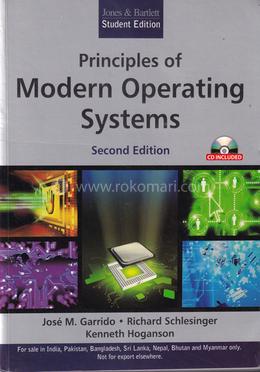
Revised and updated, the second edition of Principles of Modern Operating Systems presents a practical introduction to operating systems and illustrates these principles through a hands-on approach using accompanying simulation models developed in Java and C . Written for upper-level undergraduate courses in computer science, it provides case studies throughout featuring the implementation of Java and C simulation models, giving students a thorough look at both the theoretical and practical concepts discussed in modern OS courses. This pedagogical approach is designed to present a clearer, more realistic look at OS concepts, techniques, and methods without sacrificing the theoretical rigor that is necessary at this level. The Second Edition is the ideal text for those interested in gaining comprehensive, hands-on experience using the modern techniques and methods necessary for working with these complex systems.
Contents
Preface
Chapter 1: Basic Concepts of Operating Systems
Chapter 2: Processes and Threads
Chapter 3: System Performance and Models
Chapter 4: Systems with Multiprogramming
Chapter 5: Processor Scheduling
Chapter 6: Synchronization Principles
Chapter 7: Deadlocks
Chapter 8: File Management
Chapter 9: The I/O System
Chapter 10: Memory Management
Chapter 11: Security and Protection
Chapter 12: Networking and Distributed Systems
Chapter 13: Virtual Machines
Appendix A: Introduction to Using Linux
Appendix B: Java and POSIX Threads
Appendix C: The Java Modeling Framework
Appendix D: Psim3
Appendix E: Overview of Probability Theory
Appendix F: Using the C Models
Appendix G: The Computer System: An Overview
Bibliography





 Hello, Sign in
 Cart
Cart 


.svg) In Stock
In Stock