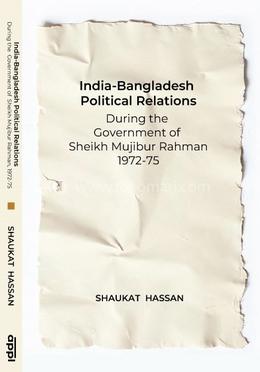
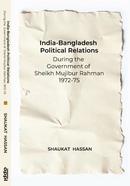
This book is the condensed version of the author’s doctoral dissertation - India-Bangladesh Political Relations during the Government of Sheikh Mujibur Rahman, 1972-75 – that was submitted to the Department of International Relations at the Australian National University, Canberra in 1987. It was based on extensive research and first-hand interviews of the primary political and security actors of that period. The dissertation addressed the critical issues – such as, the friendship treaty, land and maritime border delimitation, sharing of the Ganges waters and economic challenges - that impacted bilateral relations, and how that gravitated Sheikh Mujib and the Awami League towards control of the state.
Fast forward, to the last fifteen years, and one sees historical parallels and hears echoes from the past. In both instances, democracy was turned on its head and a virulent one-party despotic government usurped people’s rights and freedoms. There is hardly any dispute among non-Awami Leaguers that Hasina Wazed and her political party, the Awami League, had usurped the democratic will and exercised political power fraudulently from January 2009 until her downfall in August 2024. It is also generally held that her violent rule over the last fifteen years was possible because of India’s indiscriminate political support. This book is therefore a timely revisit to the first five years of Awami League administration immediately following Bangladesh’s independence in order to recall the foundational relationship between India and Bangladesh that set the tone for what transpired in bilateral relations since then. This book is key to reminding Bangladeshis of the pitfalls in asymmetric power relations, and to remain ever vigilant in navigating relations with a behemoth that surrounds Bangladesh on three sides.
 Hotline: 16297 (9 AM to 8 PM)




 Hello, Sign in
 Cart
Cart